ARTICLE ON NATURAL CALAMITIES 1
There is an urgent need to focus our attention on natural disasters that are taking place the world over due to damage to the environment. India and other countries are paying the price for environmental imbalance leading to natural disasters, which can be defined as natural phenomena, leading to extensive loss of lives and properties.
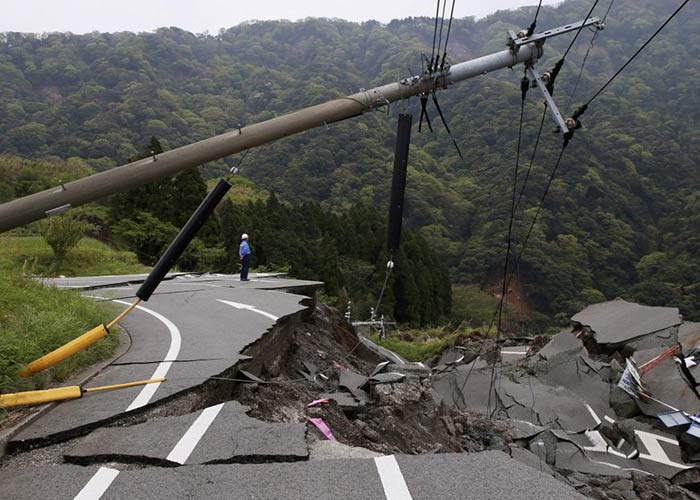
Growing Awareness
There is increasing consciousness across the world about the environment in the wake of natural calamities, but it is not making any difference on the actual ground. Only lip service is being paid to environmental protection. There is a mounting concern on environmental imbalance in India too and its impact on the individual, society and the life of the nation. But the efforts to reduce the environmental imbalance are proving to be inadequate.
Human Factors aiding Natural Disasters
There are human factors too for environmental imbalances. Prominent among them are a growing population giving rise to more human needs and consumerist tendencies. Both of these have an impact on natural resources and the sustainable capacity of the country is shrinking. Cutting of trees, land mines, misuse of water and atmospheric pollution are serious threats to the environment. All these factors have led to increase in natural disasters.
The growing need for water is constantly decreasing level of ground water, the toxic industrial solvents and dirty gutters flowing into the rivers are polluting our water resources. Dirty smoke and greenhouse gases emanating from factories and vehicles lead to the pollution of the atmosphere. This situation might deteriorate in future and the life of creatures on earth will become very painful.
Conclusion
To avert calamities, sustainable development should be given top priority. Environmental considerations should be at the centre of all development projects. We also need to strengthen the mechanism to gain information about international network of satellite data for disaster information (disaster forecast). There should be permanent mechanism to deal with natural disasters in sensitive areas.
ARTICLE ON NATURAL CALAMITIES 2
A disaster can be defined as a tragic event, such as an accident, fire, terrorist attack or explosion, which inflicts damage on its victims. A natural disaster is a natural risk or hazard caused by the Earth’s natural processes with terrible economic, humanitarian and environmental consequences. It causes a large-scale loss of life and property. So many people lose their lives during a natural upheaval and for those who are left out homeless having lost their near and dear ones; life becomes a daily struggle for survival.
Types of natural disasters
A natural disaster manifests itself in the shape of several natural hazards such as avalanches, earthquakes, volcanic eruptions, landslide, floods, tsunamis, storms, blizzards, droughts etc). These calamities wreck unbearable destruction. Human vulnerability and lack of proper planning and disaster management practices compound the woes of people with grave implications in terms of the economic, humanitarian and environmental costs. When a natural disaster strikes, it wrecks unimaginable loss of lives on the Earth. It destroys everything in a moment.
Disaster Management in India
Human response to natural calamities requires proper planning and emergency management. India has not made much headway on the ground of disaster management as its lack of preparedness has shown time and again in the aftermath of calamities. In the 2013, Uttarakhand floods, when the fury of nature struck the hill state, there was no disaster management plan. Despite the fact that hilly terrains are always surrounded by the threat of natural disasters, the state government had shown no adequate preparation. According to a Comptroller and Auditor General (CAG) report tabled in March 2013, the State Disaster Management Authority, which was formed in 2007, did not meet at all between 2008 and 2012 to suggest and implement any remedial measures in the event of a natural calamity. The CAG report also pointed to widespread irregularities in the use of State Disaster Relief Fund.
How to cope with natural disasters?
Despite tremendous scientific and technological advancements, we do not exactly know when and where a particular disaster will strike. It is a natural process and we cannot stop it. But with some preparation, we can lessen its occurrence and also reduce the magnitude of the loss of life and property post-disaster. For instance, global warming is the root of all the problems, efforts must be made to preserve and protect the environment to prevent climate change.
Efforts should be made to devise an advance warning system to minimize the impact of disaster. People should be made educated about the need for evacuation. More and more stress should be laid on constructing buildings that are strong enough to withstand an earthquake.
After any disaster, the adequacy of the money to rebuild our lives can further add to the woes of people. People should take steps to obtain comprehensive insurance coverage for damages to them, their houses and belongings after the occurrence of flood, earthquake, landslide, major fire or any other natural calamity.
ARTICLE ON NATURAL CALAMITIES 3
Natural calamities are occurrences that take place as natural disturbances, resulting in widespread destruction of lives and properties. Thousands of people in India are killed every year due to natural calamities such as floods, earthquakes, heavy rains, cloud bursts, lightning, landslides, and other natural disasters. Later, thousands of people die from diseases caused by natural disasters. Despite widespread destruction caused by these occurrences, the country does not have an effective disaster management system in place.
Earthquakes, landslides, droughts, floods, tsunamis and cyclones are major examples of natural calamities. In terms of earthquakes, Himalayan, sub-Himalayan regions, Kutch and the Andaman and Nicobar Islands are the seismically vulnerable regions in India.
Types of Disasters and their spread in India
Earthquake is caused by the increase in internal pressure between the tectonic plates – huge rock pieces within the earth’s crust – which causes them to break apart. The earth starts shaking and if earthquake’s seismic intensity is high it leads to collapse of buildings, houses, bridges etc, leading to loss of lives and properties. In addition to simple and mild earthquakes, severe earthquakes have occurred in different parts of the country such as Uttarkashi (1991), Latur (1993) and Jabalpur (1997).
Landslide occurs due to sliding of rocks caused by gravity, friction, earthquakes, rains and man-made acts.
Draught is caused by the fall of lower volumes of rain. It is mainly of three types – of meteorology, hydrology and agriculture-related. The 16 percent area in the country is drought prone. Severe drought occurred in the country in 1941, 1951, 1979, 1982 and 1987. North-western part of the country is highly drought-prone region.
Floods come due to more rain in a short time, low pressure areas and low exit-flow. India is the second highly affected country where floods are common in the rainy season. Nearly every year, terrible floods occur leading to occurrences such as loss of life, damage to property, and human health problems. National Flood Commission has determined 40 million hectares of land as the flood-prone area in the country. Ganga, Brahmaputra, Narmada, Tapi, Godavari, Krishna and Cauvery river valleys comprise most flood prone areas.
Typhoons occur due to earthquake (tsunami) in the oceans. Cyclones come due to temperature and pressure variations in the ocean. In the Bay of Bengal and the Arabian Sea, 5 to 6 tropical cyclones take place every year. West Bengal, Orissa, Andhra Pradesh, Tamil Nadu parallel to the east coast in the Bay of Bengal, and Gujarat and Maharashtra parallel to the west coast in the Arabian Sea states are the areas with high potential for cyclones and tsunamis.
Wildfire or forest fire occurs in rain forests or in the forests of trees with tall leafs. It often takes place in the forests of conifer and evergreen trees and those with big leaves in warm and dry areas. Wildfire is dangerous for environment, agricultural land, animals and insects.
Conclusion
Over-exploitation of natural resources has led to environmental imbalance which also contributes to increasing instance of natural disasters. Due to the result of unscrupulous exploitation of nature, sometimes we have floods in some parts of the country while some are afflicted with drought. There is undue exploitation of water resources due to increasing urbanization and industrialization. It has led to contamination of water and decrease in ground water levels. In the wake of increasing concretisation, we do not have adequate groundwater recharge. In cities, there is massive accumulation of wastes, which is being dumped on the spot without treatment. These are only few instances of man’s greed that is playing havoc with nature’s balance. We need to embrace development, which is in harmony with Nature. Otherwise, by ignoring Nature, we will only be scripting our own destruction.

 Shraboni's Blog